
Peugeot E-208 GTi at Le Mans
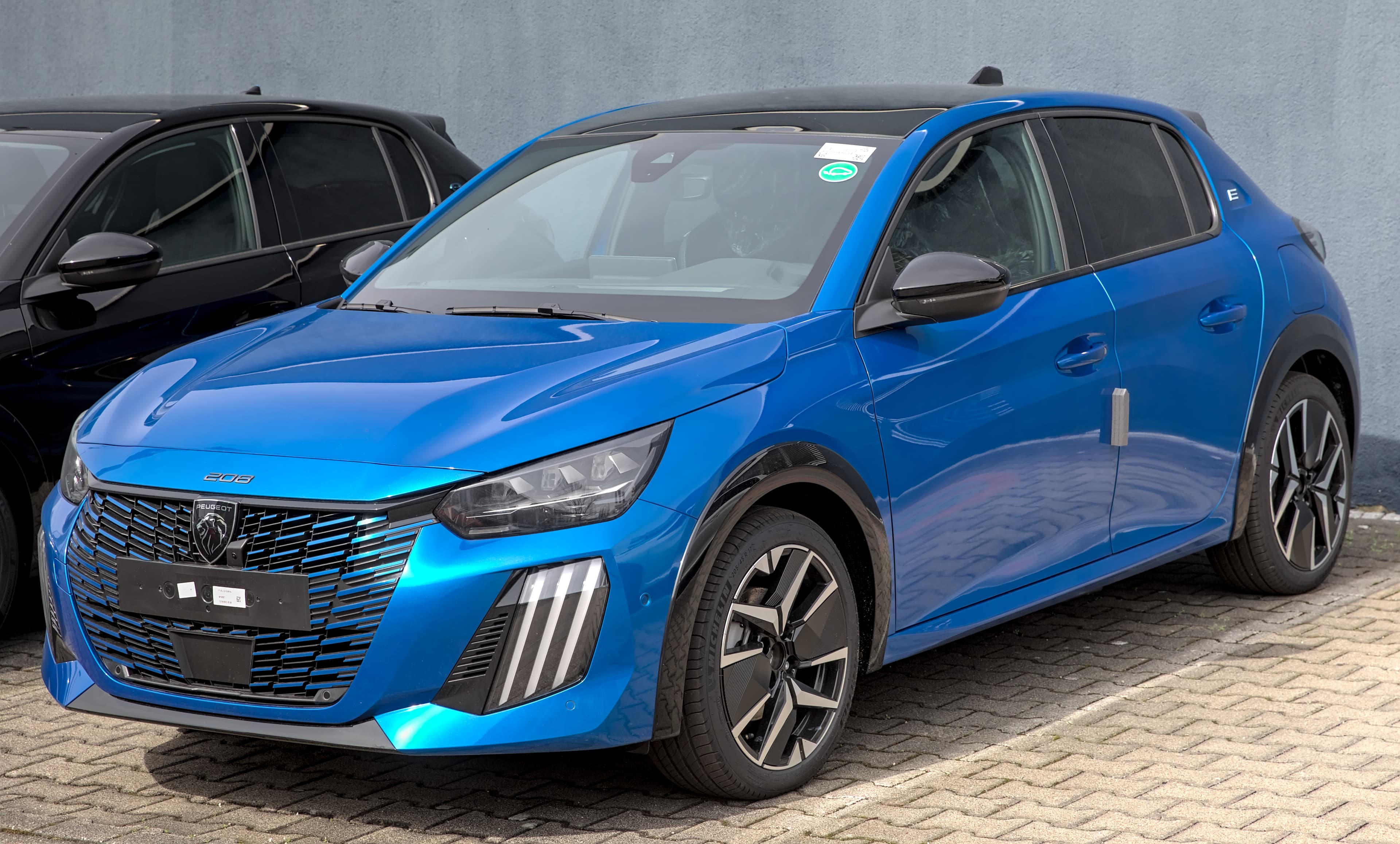
Peugeot revealed the production E-208 GTi at the 24 Hours of Le Mans, marking its first all-electric GTi after a 2025 concept debut and a century of the brand at the French endurance race.
What happened
Electric Cars Report covered Peugeot's production reveal of the E-208 GTi at the 24 Hours of Le Mans in June 2026, calling it the brand's first all-electric GTi.
Peugeot showed a concept version at Le Mans in 2025, and the 2026 reveal lands during a year marking 100 years of Peugeot participation at the famous endurance race.
The hatchback was developed with Peugeot Sport and Peugeot Design teams in France, pairing motorsport engineering with the brand's design studio rather than treating the GTi as a cosmetic trim.
Electric Cars Report notes that full specifications, including power, range, and pricing, are reserved for an upcoming press conference rather than the Le Mans reveal itself.
Display vehicles at Le Mans wore blue, white, and red colors tied to the brand's French racing identity.
The timing links Peugeot's electric hot hatch to endurance-racing heritage at the same event where the company has campaigned for a century.
The Eastward Take
The GTi badge is not a trim level.
It is a permission slip.
It tells enthusiasts that a humble hatchback is allowed to be fast, loud in spirit if not in exhaust, and a little unreasonable on a Tuesday.
Peugeot revealing the production E-208 GTi at Le Mans is therefore not just another EV debut.
It is an argument about whether hot hatch culture survives the electric transition with its personality intact.
Le Mans as the stage is deliberate theater.
Peugeot has a century of history at the race, and endurance culture values efficiency, braking discipline, and repeated performance under stress.
Translating that ethos into a city-sized electric hatch is the kind of brand poetry marketers love and engineers must actually prove.
The 2025 concept followed by a 2026 production reveal gives the story a proper rhythm.
Concepts tease appetite.
Production cars test whether the appetite was honest.
Reserving specs for a later press conference is classic auto-show discipline, but it also keeps the enthusiast conversation focused on identity before kilowatts arrive.
Blue, white, and red display colors are not subtle.
This car wants to be read as French performance heritage updated for a battery era, not as a compliance EV wearing a sporty bumper.
If you grew up in hot hatch internet culture, you already know the names: Golf GTi, Civic Type R, Focus ST, Clio RS, and the older Peugeot GTi legends that made compact cars feel like events.
The GTi promise was never only speed.
It was accessible drama: a car your aunt could still recognize, with suspension and steering that made backroads feel personal.
Electric performance identity changes the vocabulary.
Instant torque replaces rev buildup.
Tire strategy replaces exhaust note as the personality cue.
Software defines how playful the car feels on a wet on-ramp.
Enthusiasts who love GTis are not automatically anti-EV.
They are pro-feedback.
They want the car to talk back through the wheel, not only through a leaderboard app.
Peugeot Sport involvement matters because hot hatches live or die on integration.
A powerful motor in a grocery getter without chassis discipline is just a fast appliance.
The GTi tradition is about harmony: brakes, damping, steering weight, seat support, and the confidence to carry speed into a corner without drama.
An electric GTi must pass that test or the badge becomes nostalgia merch.
For Asian North American readers, the immediate frustration is geographic.
The United States will not get this car in any meaningful showroom sense.
Peugeot is not a mainstream U.S. brand anymore, and federal market priorities rarely center on French hot hatches.
That absence is old news, but it still shapes how diaspora enthusiasts consume automotive culture.
You watch the reveal on a phone in Fremont.
You compare it mentally against a Model 3 Performance or a used Golf R.
You wonder why the interesting small cars always seem to land where your lease agreement does not.
Canadian and European diaspora angles are more alive here.
If you have family in Montreal, Toronto's European adjacency, or cousins in Paris, the E-208 GTi is not fantasy metal.
It is a plausible future purchase conversation in markets where Peugeot still exists as a daily brand.
Cross-border cousins create the usual envy loop.
The Vancouver reader who cannot buy it may still ride in one on a trip.
The Texas reader may hear about it from a friend doing a grad program in Lyon.
Hot hatch culture has always traveled through forums, videos, and vacation stories faster than through dealer allocations.
EV performance identity adds a new layer.
European cities already mix tight parking, aggressive taxation on displacement, and improving charging density.
An electric GTi is not a compromise there.
It is alignment.
North American suburbs often punish small cars with highway speeds, pickup-truck sight lines, and parking lots designed for crossovers.
That does not make the E-208 GTi irrelevant here.
It makes it cultural import.
You admire the recipe even when your driveway demands a different dish.
There is also a lesson for how Asian American and Asian Canadian buyers evaluate domestic-market performance EVs.
When Peugeot ties a GTi to Le Mans heritage, it is selling context, not just acceleration.
Hyundai, Kia, BMW, and others now sell fast EVs in North America, but many feel marketed as tech objects first and driving characters second.
Enthusiasts pay attention to which brands still treat compact performance as craft.
Peugeot doing an electric GTi says the hot hatch tribe is worth keeping, not abandoning for crossover volume alone.
Specs will ultimately decide seriousness.
Power without thermal management fails on track days.
Range without charging strategy fails on road trips.
Weight without brake upgrade fails the first hard stop from highway speed.
Until numbers arrive, judge the intent.
Concept to production in one Le Mans cycle suggests the project is not a one-off motor show joke.
Development in France with Peugeot Sport and Design is the right org chart for credibility.
If Europe keeps investing in small fast EVs while America gets another lifted crossover, the taste gap widens.
Kids who grow up on sim racing and YouTube reviews will know the E-208 GTi by name even if they never sit in one.
That knowledge changes what they expect from the cars they can buy.
For practical North American shoppers, the actionable move is comparison, not import dreaming.
Test the hot EVs you can actually service.
Ask whether steering feel, brake confidence, and thermal repeatability match the horsepower headline.
Use Peugeot's reveal as a benchmark question at the next test drive.
Does this car have a point of view, or only a point on a spec sheet?
If the U.S. will not get the E-208 GTi, borrow the standard.
Demand character from the cars that do arrive.
Hot hatch culture was never about the biggest engine.
It was about the smartest package.
An electric GTi at Le Mans says the package still matters.
Your market may skip the car.
You do not have to skip the lesson.
Source
This note summarizes reporting from Electric Cars Report. Read the original for full details.