
DOT Proposes 100 Percent Domestic Content Rule for NEVI Chargers
The U.S. Department of Transportation proposed raising Buy America domestic content requirements for federally funded EV chargers from 55 percent to 100 percent, a standard industry groups say no commercial charger currently meets.
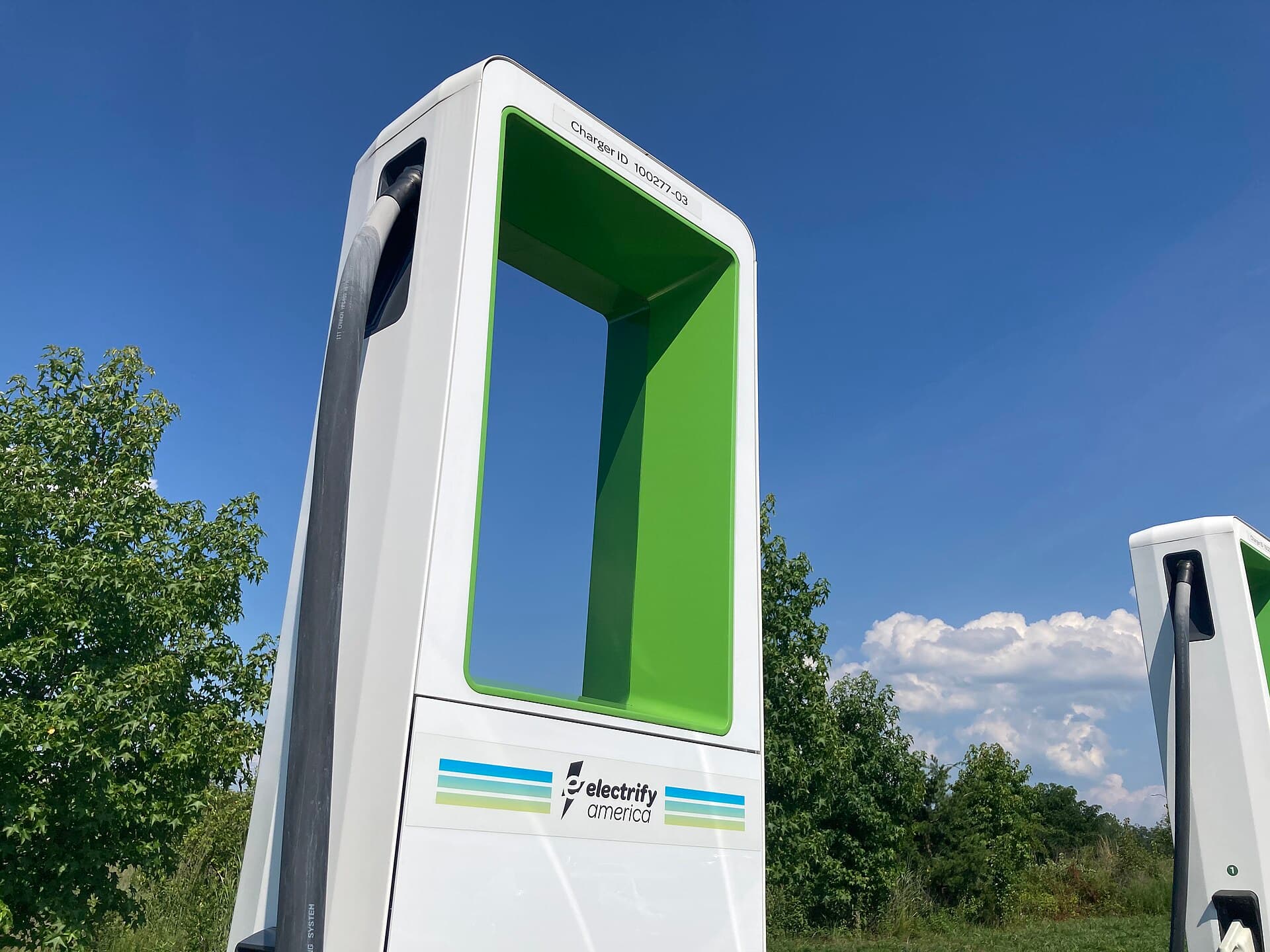
Federal highway charging policy is fighting itself again, and drivers feel it in the gap between a station on the map and a station that actually opens.
EV Infrastructure News reported that the U.S. Department of Transportation proposed requiring 100 percent domestic content for EV chargers purchased or installed with Federal Highway Administration funds, up from the current 55 percent Buy America threshold. Transportation Secretary Sean Duffy framed the move as strengthening domestic manufacturing and competitiveness.
Industry groups read it differently. The Zero Emission Transportation Association's Albert Gore said the proposal does not meet the industry where it is today and may discourage investment in U.S.-made chargers, ultimately hindering the job growth Buy America is meant to create.
Automotive World and other outlets note that no commercially available charger currently meets a 100 percent standard, which would effectively stall NEVI deployment without formally freezing the program. That matters because a federal judge had already ruled earlier in 2026 that withholding congressionally appropriated NEVI funds was unlawful. A content rule manufacturers cannot hit achieves a similar slowdown through paperwork instead of a press release.
States were beginning to spend awards when the proposal landed. Georgia, for example, was counting on roughly $134 million for dozens of new stalls. Washington's Round 1 NEVI awards for eastern corridors, which we covered in our PNW charging note, sit inside the same federal ecosystem.
For road-trip families, this is not abstract politics. It is whether I-95, I-80, and I-5 get the next wave of reliable fast chargers on schedule or enter another season of app roulette.
Asian American and Asian Canadian households comparing EV against hybrid for Tahoe, Dallas to Austin, or Toronto to Montreal should treat NEVI uncertainty as a planning input, not a reason to panic-buy gas. Public charging is already uneven. Policy whiplash makes the unevenness harder to forecast.
Watch whether states delay construction bids while manufacturers ask for waivers. If your purchase timeline depends on corridor fast charging arriving next year, build buffer into the spreadsheet. If you charge mostly at home, the fight is upstream news that still shapes resale values and family approval conversations.
Pair this with our Willows Supercharger permit story and Optimus Energy's South Carolina network acquisition. Private operators are moving while federal rules argue. Your road trip may depend on which side wins locally.
Source
This note summarizes reporting from EV Infrastructure News. Read the original for full details.