
GM Energy Pass Unifies Public Charging in One App
GM announced Energy Pass on June 9, building find-charge-pay access to Tesla Superchargers, IONNA, and Electrify America into the MyChevrolet, MyCadillac, and MyGMC apps, covering nearly 70 percent of U.S. DC fast chargers.
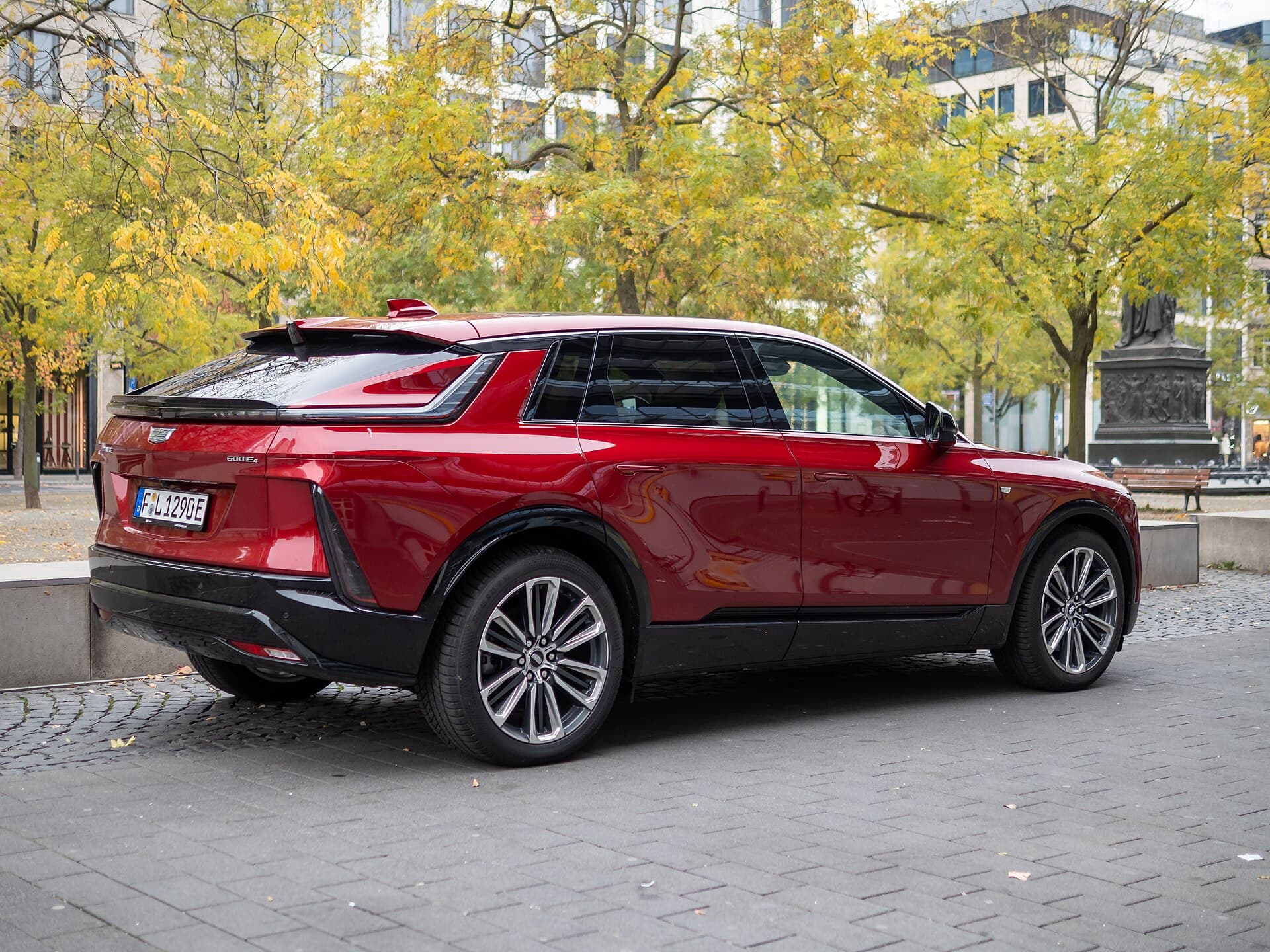
What happened
General Motors announced Energy Pass on June 9, 2026, introducing a unified public charging experience inside the MyChevrolet, MyCadillac, and MyGMC mobile apps.
At launch, GM says Energy Pass connects drivers to Tesla Superchargers, IONNA, and Electrify America, with ChargePoint and EVgo joining soon.
Together, GM says those networks cover nearly 70 percent of all DC fast chargers in the United States, plus many Level 2 chargers, through one app and one payment account.
Drivers can locate stations, start sessions, pay, and review charging history without juggling separate operator apps.
Plug and Charge is already available at IONNA Rechargeries and EVgo stations, with ChargePoint support planned for summer 2026.
GM plans an over-the-air update later in 2026 to enable Plug and Charge at Tesla Superchargers for its NACS-native EVs.
The 2026 Cadillac OPTIQ and 2027 Chevrolet Bolt already use native NACS ports, and GM expects all new 2027 model year Chevrolet, GMC, and Cadillac EVs to launch with native NACS charge ports between launch and December 2026.
The Eastward Take
The app drawer is where EV ownership still breaks for a lot of households.
You know the stack.
Tesla app for one network.
Electrify America for another.
ChargePoint if your building uses it.
EVgo when the first two are occupied.
A credit card you forgot was expired.
A spouse asking why the session will not start while you are blocking a charger in a Costco row.
GM Energy Pass does not fix every charging problem.
It attacks the most insulting one: administrative friction on top of range math.
For Asian American and Asian Canadian drivers who already treat the car as household infrastructure, that friction is not a tech quirk.
It is a family argument waiting to happen.
Unified billing in MyChevrolet, MyCadillac, or MyGMC matters because many GM EV households are not single-app people.
They are parents coordinating school runs, airport pickups, and weekend visits to relatives two states away.
They do not want to become charging-network hobbyists just to drive a Lyriq or Blazer EV responsibly.
Covering nearly 70 percent of U.S. DC fast chargers at launch is the number that actually changes behavior.
Not because 70 percent is perfect.
Because it is finally enough to plan a real trip without carrying five logins in your head.
Tesla Supercharger access inside a GM app is the headline, but the quieter win is normalization.
When your Cadillac app can start a Supercharger session, the NACS transition stops feeling like an adapter dongle story and starts feeling like infrastructure.
That matters in suburbs where the driveway conversation already included whether you were buying a badge, a battery, or a lifestyle.
Plug and Charge at IONNA and EVgo is the convenience layer wealthy early adopters brag about.
For everyone else, it is the difference between fumbling with an app in rain and simply plugging in before your kid spills a boba in the back seat.
GM promising ChargePoint this summer and Tesla Plug and Charge over the air later this year tells you the product is a platform, not a press release.
They are still wiring the pipes.
You should still map your routes.
Energy Pass does not replace our condo EV guide or the hybrid-versus-EV city framework.
It makes GM ownership less embarrassing when public charging is part of your week.
If you street-park in Queens or rent in Burnaby without Level 2, this announcement does not magically give you a charger.
If you have workplace charging or a deeded stall, it reduces the mental tax every time you leave the city.
There is also a cross-border angle for Canadian readers shopping U.S.-built GM EVs or traveling south.
GM notes Energy Pass access across major networks in the U.S. and Canada.
Families who split time between Toronto and Michigan, or Vancouver and Seattle, care about whether the app story holds on both sides of the border.
Read the fine print on roaming and payment currency before you assume one account solves everything.
The NACS timeline is equally practical.
Native ports on 2027 model year GM EVs mean fewer adapters rattling in the frunk.
Adapters are fine for early adopters.
They are another thing to lose for everyone else.
If you are cross-shopping a used CCS-only Bolt EUV against a new NACS-native Bolt, Energy Pass is part of why the used market math may shift again.
Insurance, parking, and home electricity still dominate ownership cost.
Do not let a slick app erase those lines in the spreadsheet.
But if public charging was the last objection keeping your household on hybrid, this is a real step.
Compare it honestly to Tesla's native experience and to the Toyota hybrid your uncle still recommends.
The winner is not the loudest app.
It is the setup your family will actually use on a tired Thursday.
Energy Pass is GM admitting that software ecosystem matters as much as kilowatt-hours.
For diaspora buyers who learned to trust Toyota because the dealer experience was boring and predictable, boring unified charging is a feature.
Run our commute and road-trip calculators on the routes you drive.
Then test whether one app really feels simpler than the stack you have now.
If it does, GM just removed a legitimate reason to delay an EV that already fit your garage.
If it does not, the hybrid aisle is still right there, and nobody should guilt you for choosing logistics over ideology.
Watch real owner feedback after the first summer road-trip wave.
Receipt clarity and session reliability matter more than launch-day applause.
Normal, dependable charging is the cultural win diaspora households have been asking for.
Source
This note summarizes reporting from General Motors. Read the original for full details.