
Dodge Charger Export to Europe
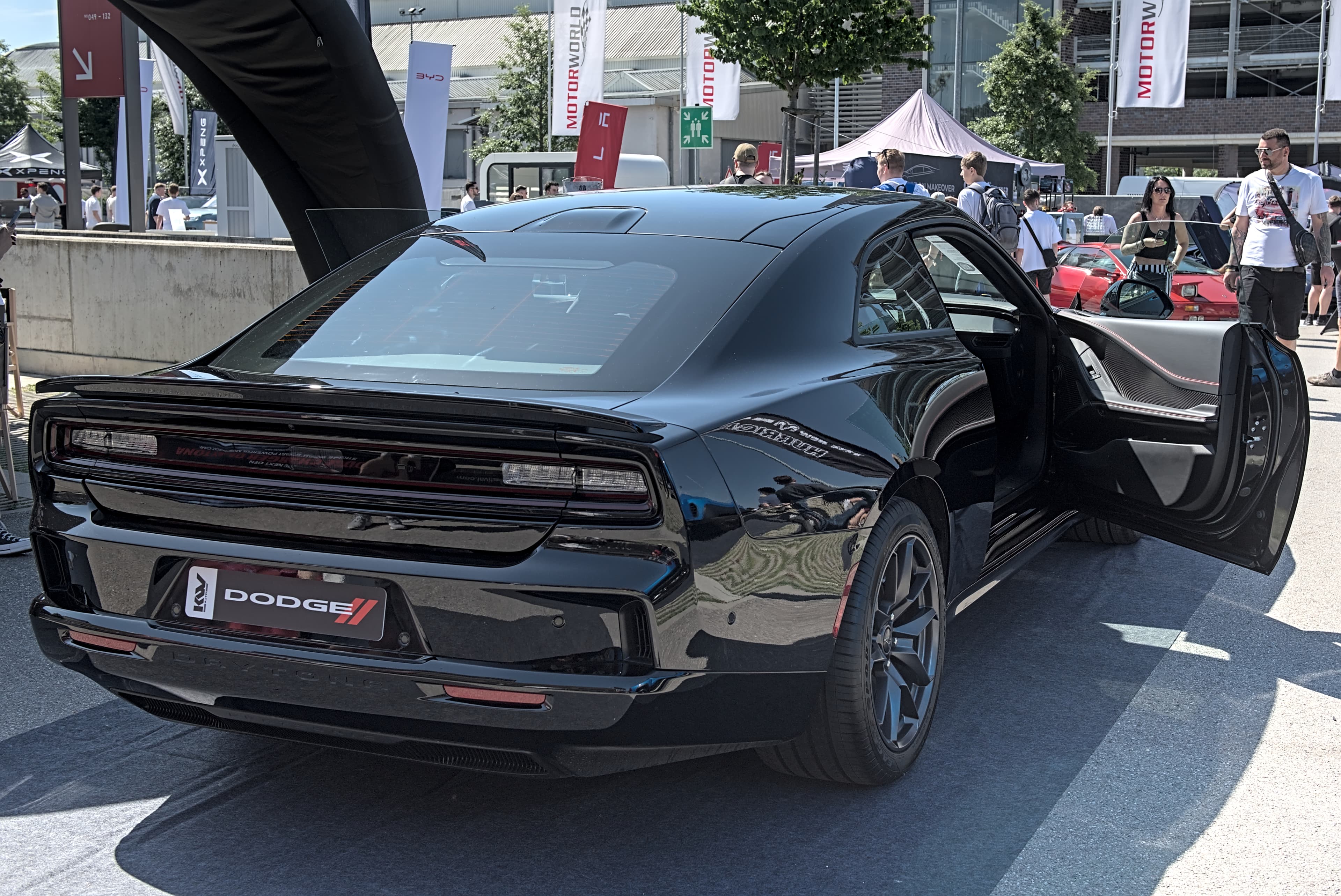
Dodge announced on June 8 that it will export the full Charger lineup to Europe, including Sixpack gas and Daytona EV models, after weak U.S. sales and with KW Automotive handling import and Iron Parts supplying spares.
What happened
Car and Driver reported on June 8, 2026 that Dodge will export its entire Charger lineup to Europe, covering both the Sixpack gasoline models and the Daytona electric muscle car.
The announcement comes after disappointing U.S. sales figures. Dodge sold 7,421 Daytona EV units in 2025 and just 240 in the first quarter of 2026, while Sixpack gas Charger sales reached 1,672 units in Q1 2026.
European distribution will be handled by KW Automotive as the importer, with Iron Parts responsible for spare parts supply.
Dodge has not announced a timeline for European availability, and Car and Driver notes that European regulations may require changes to the vehicles before they can be sold there.
Car and Driver frames the decision as a bid to find buyers overseas for a muscle-car nameplate that still carries brand weight even as American shoppers lean toward crossovers and rival EVs.
The export plan covers the full lineup rather than a limited special-edition run, signaling that Europe is meant to be a sustained second market, not a one-off publicity exercise.
The Eastward Take
Muscle car nostalgia in Asian North American households is not abstract.
It is a cousin in Mississauga who still talks about a Challenger he saw at a meet.
It is a dad in San Jose who grew up watching American movies where the Charger was the loudest character on screen.
It is a kid in Houston who wants something with presence but hears a lecture about insurance, fuel, and what the neighbors will think.
Dodge exporting the entire Charger lineup to Europe after weak U.S. sales is therefore a family story dressed up as an industry press release.
The numbers are blunt.
7,421 Daytona EVs in 2025.
240 in Q1 2026.
1,672 Sixpack gas cars in the same quarter.
Those are not cultural-death figures.
They are volume figures, and volume is what keeps factories, dealer lots, and marketing budgets alive.
When the home market hesitates, exporting is not romance.
It is arithmetic.
Europe becomes a second-chance showroom for a badge that still means something emotionally even when the spreadsheet says otherwise.
That second-chance framing matters to diaspora buyers who already live between markets.
If you have family in Germany, France, or the U.K., you know how differently performance cars get read abroad.
A Charger Daytona that feels oversized and politically complicated in a California HOA can feel like straightforward American mythology on a Belgian backroad.
KW Automotive as importer and Iron Parts for spares tells you Dodge is not casually tossing a few containers across the Atlantic.
Someone is building a service path because European owners will expect parts, warranty logic, and recall responsiveness at a higher standard than a gray-market fantasy.
The missing timeline is the honest part.
Announcing export intent without dates usually means homologation homework still sits on someone's desk.
European regulations may force hardware or software changes.
EV noise rules, pedestrian safety packaging, charging standards, and local efficiency labeling all eat launch confidence.
For Asian American enthusiasts who wanted a Daytona but could not justify the payment or charging reality, watching Europe get first structured access may sting.
For Asian Canadian readers with cousins overseas, it may simply confirm what they already see on social feeds: the interesting metal often lands elsewhere first.
The gas versus EV split inside one nameplate is where family debate gets real.
Plenty of households are not anti-EV in principle.
They are anti-surprise.
A Daytona EV is a statement car that demands home charging math, public fast-charging backup, and a conversation about how long Stellantis will support software and battery service in your zip code.
A Sixpack gas Charger is a statement car that demands a different apology at Sunday dinner: fuel cost, emissions guilt, and whether teenage street reputation is worth the premium.
Dodge keeping both paths alive for export suggests the brand still believes the Charger name can carry dual identities.
At home, that belief is colliding with crossover practicality and Tesla-shaped expectations.
Abroad, it might find buyers who treat American muscle as imported culture rather than daily infrastructure.
Export is a way to monetize memory when the local audience has moved on to quieter compromises.
That does not make the Charger a failure.
It makes the Charger a chapter.
Muscle car nostalgia among first- and second-generation Asian North Americans often mixes admiration with pragmatism.
You can love the silhouette and still buy the RAV4.
You can respect the V8 sermon and still lease the Model Y because the building only has two shared chargers and your spot is on level P3.
The Charger export news will not change those household equations tomorrow.
It does change how you interpret Stellantis strategy.
If the U.S. is not giving Dodge the volume it needs, Europe is not a vanity project.
It is revenue hunting with brand equity that still travels well in places where American automotive mythology was consumed through film, games, and vacation rentals before it was consumed through dealer test drives.
There is also a generational angle inside the diaspora.
Older relatives sometimes associate American cars with arrival stories: big sedans, big engines, big confidence.
Younger relatives often associate performance with tech credibility: launch control, OTA updates, charging curves, resale apps.
The Daytona sits awkwardly between those generations.
It looks like the past rebooted.
It behaves like a product from a company still learning how to sell EV emotion without losing gas heritage.
Exporting both Sixpack and Daytona together is Dodge saying the family argument is not resolved, so we will sell the argument overseas.
For enthusiasts, the practical takeaway is not to preorder a European import through a cousin.
Homologation and warranty borders make that a hobby for the wealthy and patient.
The takeaway is to read U.S. weakness and European ambition as one connected signal.
When a storied nameplate needs another continent to stay interesting, your local dealer discount math may improve even if your emotional attachment does not.
Watch spare parts partnerships.
Watch whether Daytona gets software support long enough to feel ownable, not leaseable.
Watch whether gas Sixpack exports siphon engineering attention from the EV story Stellantis says it wants.
If you are cross-shopping anyway, compare what the Charger offers against Korean performance EVs, used C8 curiosity, or the boring crossover that keeps parents calm.
Muscle car nostalgia is allowed.
It just is not free.
Europe may give Dodge a stage.
Your driveway still asks the same questions: where do you charge, who fixes it, and what does the household budget say when the novelty wears off.
Export is a second chance for the brand.
For buyers, the first chance is still the one that has to fit parking, insurance, and family peace.
If the Charger ever feels like a movie car again, it might be because someone across the Atlantic bought the fantasy so you could eventually buy the clearance.
Until then, treat this announcement as culture meeting logistics.
The badge still travels.
The volume just needs a new passport.
Source
This note summarizes reporting from Car and Driver. Read the original for full details.