
In China, Western Car Brands Are Becoming a "Brand for the Parents"
InsideEVs reports that younger Chinese buyers now see legacy American and European nameplates as outdated, while BYD, Geely, and Xiaomi win on tech and value.
What happened
InsideEVs reported ahead of Auto China that younger car buyers in China increasingly view legacy Western automakers as a "brand for the parents," quoting Volkswagen China CEO Robert Cisek in a Reuters interview.
The piece notes that German and American badges once signaled top-tier status for Chinese buyers but now struggle against domestic brands offering newer technology and faster product cycles.
InsideEVs cites sales pressure on foreign brands: Buick sales in China have more than halved since 2017, and Volkswagen has seen nearly a 27% decline over the same period.
Domestic players including BYD, Geely, and Xiaomi are capturing customers who previously would have chosen German or American brands.
The report adds that Chinese brands are also moving upmarket, using Auto China to challenge BMW, Mercedes-Benz, and Porsche on technology and premium positioning.
The Eastward Take
Every immigrant family knows what it feels like when the status map flips.
One generation saves for the badge that proved success in the old country or the new one.
The next generation rolls their eyes and buys the thing with the better screen.
InsideEVs calling Western brands a \"brand for the parents\" in China is that story at national scale.
Volkswagen China CEO Robert Cisek did not say it to be cruel.
He said it because the market told him.
That is what makes the quote sting for legacy automakers everywhere.
It is not anti-Western sentiment.
It is generational product logic.
If you are under 35 in Shanghai or Chengdu, why would you wait three model years for a mid-cycle refresh when local brands iterate software monthly and launch new EVs like phone cycles?
Heritage used to mean trust.
Now, in China's EV-heavy market, heritage can read as slow.
Buick halving sales since 2017 and Volkswagen down roughly 27% is not a footnote.
Those were mainstream family brands for Chinese upward mobility.
They were the Camry and Accord of a different social script.
Watching them fade while BYD, Geely, and Xiaomi rise should feel familiar to anyone who watched Toyota and Honda rewrite American family driveways in the 1980s and 1990s.
The script rhymes.
Different countries, same parental anxiety.
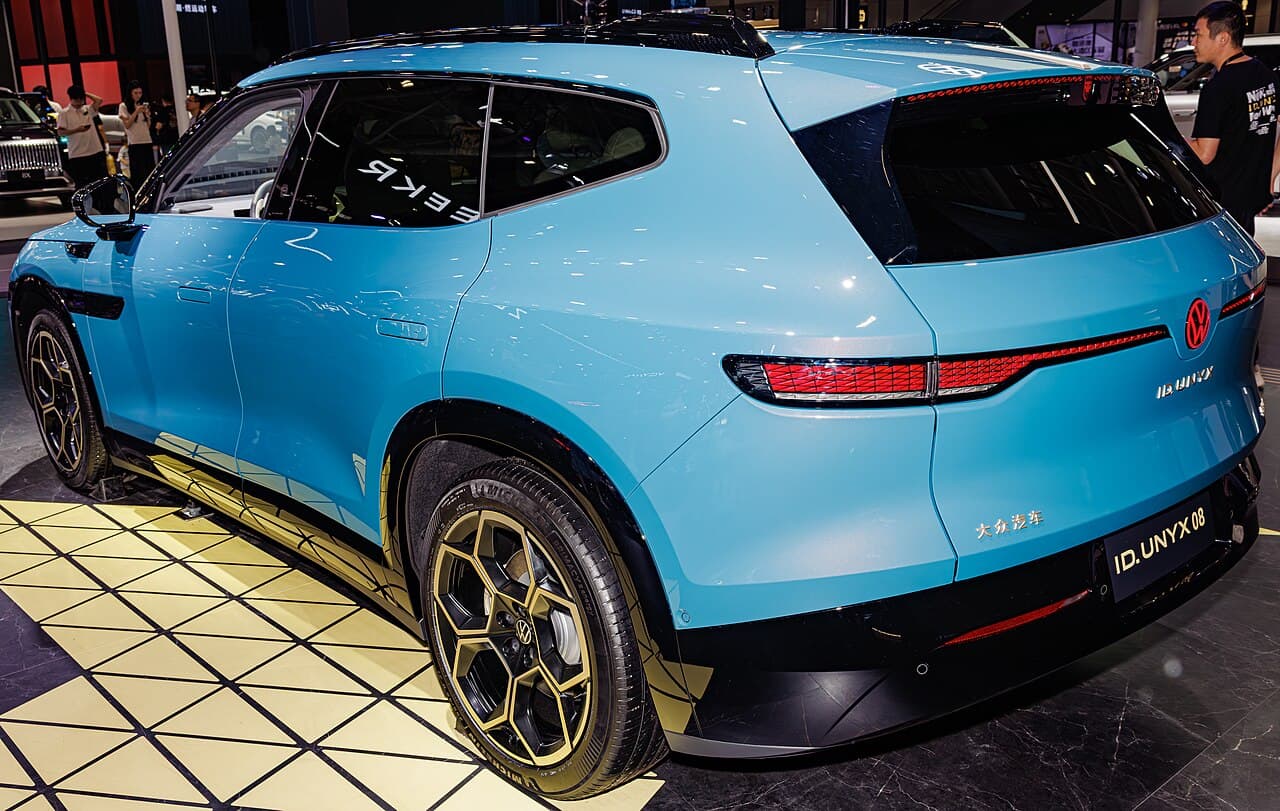
Volkswagen's China-specific products like the ID. Unyx family are the corporate response to Cisek's warning.
Global brands now build China-only EVs with local software partners because the old import playbook stopped working.
Xiaomi entering cars unsettles legacy executives because phone-era companies understand update cycles and UI loyalty in ways traditional automakers are still learning under pressure.
Premium German brands fighting back at Auto China is not vanity.
It is survival.
If you cannot prove tech and design at home, your global premium story weakens everywhere.
Asian North American luxury shoppers feel echoes when Genesis gets taken seriously while older badges coast on memory.
Diaspora dinner conversations already include this tension.
A parent says BMW.
A child says BYD or Tesla or why not lease.
Nobody is wrong.
They are reading different status maps from different decades.
Western brands are not dead in China.
They are aging in public.
For Asian North American readers, this is not a story happening \"over there\" in the abstract.
It directly affects the cars you can buy here.
Global R&D dollars follow competitive pressure.
When China stops treating German roundels as default premium, BMW and Mercedes do not shrug.
They chase software partnerships, China-specific EVs, and cost wars that ripple into U.S. lineups.
It also reframes the Chinese EV export push Americans keep debating.
These are not random upstarts trying to dump cheap metal.
They are brands that already won the youth market at home against the same companies that built your parents' status symbols.
That is a different kind of threat than tariff talking points admit.
There is also a mirror here for diaspora parents in California, Texas, or the GTA.
How many times has a kid said Lexus feels like an auntie car while eyeing a Tesla or Genesis?
Now imagine that generational eye-roll aimed at BMW itself.
China is just farther along because the EV transition arrived faster and domestic choice exploded.
InsideEVs framing around Auto China is timely because auto shows are where brands perform confidence.
This year the performance is coming from locals.
Western booths have to prove they are not only for older buyers with memory, not appetite.
The Buick collapse is especially symbolic for older Chinese American families.
Buick was once a respectable upward-mobility badge in both countries.
Watching it shrink in China while domestic SUVs take over feels like reading tomorrow's newspaper for global brands that refuse to update their emotional contract with young buyers.
Mercedes and BMW still sell.
But the growth story belongs to companies that treat infotainment like a product, not an afterthought.
That should sound familiar if you ever tried to explain to a parent why CarPlay mattered more than a hood ornament.
Software updates are the new reliability narrative for a generation that grew up on phones that improved after purchase.
Legacy automakers that cannot promise that feel old even when the leather is fine.
If you are shopping in North America today, do not treat this as foreign gossip.
Ask why the global brands you trust are losing the youth vote in the world's largest car market.
Ask what that means for resale, software support, and how quickly your model will feel old.
Ask whether your dealer can explain update policy as clearly as a Xiaomi store clerk explains OTA schedules.
The answer may push you toward a hybrid Toyota default.
It may push you toward a Korean EV bargain.
It may explain why your cousin in Beijing thinks your Euro badge is charmingly vintage.
Either way, \"brand for the parents\" is now an industry diagnosis, not a family insult.
It just happens to sound like both.
There is a softer lesson here too.
Parents are not foolish for valuing heritage.
Heritage captured real quality when alternatives were risky.
The insult is only when brands ask loyalty for yesterday's proof while refusing today's homework.
Young buyers in China are not rejecting cars.
They are rejecting stagnation.
North American families navigating the same EV transition should respect that instinct even when the badge on the hood is different.
Buy the car that fits your parking, your payment, and your tolerance for family commentary.
Just know the global market is no longer letting legacy names rest on reputation alone.
China figured that out first because the switch happened faster and the local competition was ruthless.
Your driveway is next.
Source
This note summarizes reporting from InsideEVs. Read the original for full details.