
Best PHEV Without Home Charging
Plug-in hybrid only saves money if you actually plug in somewhere predictable. Start with what Level 1 and Level 2 mean, then match the car to stalls you can access — not a garage you do not have.
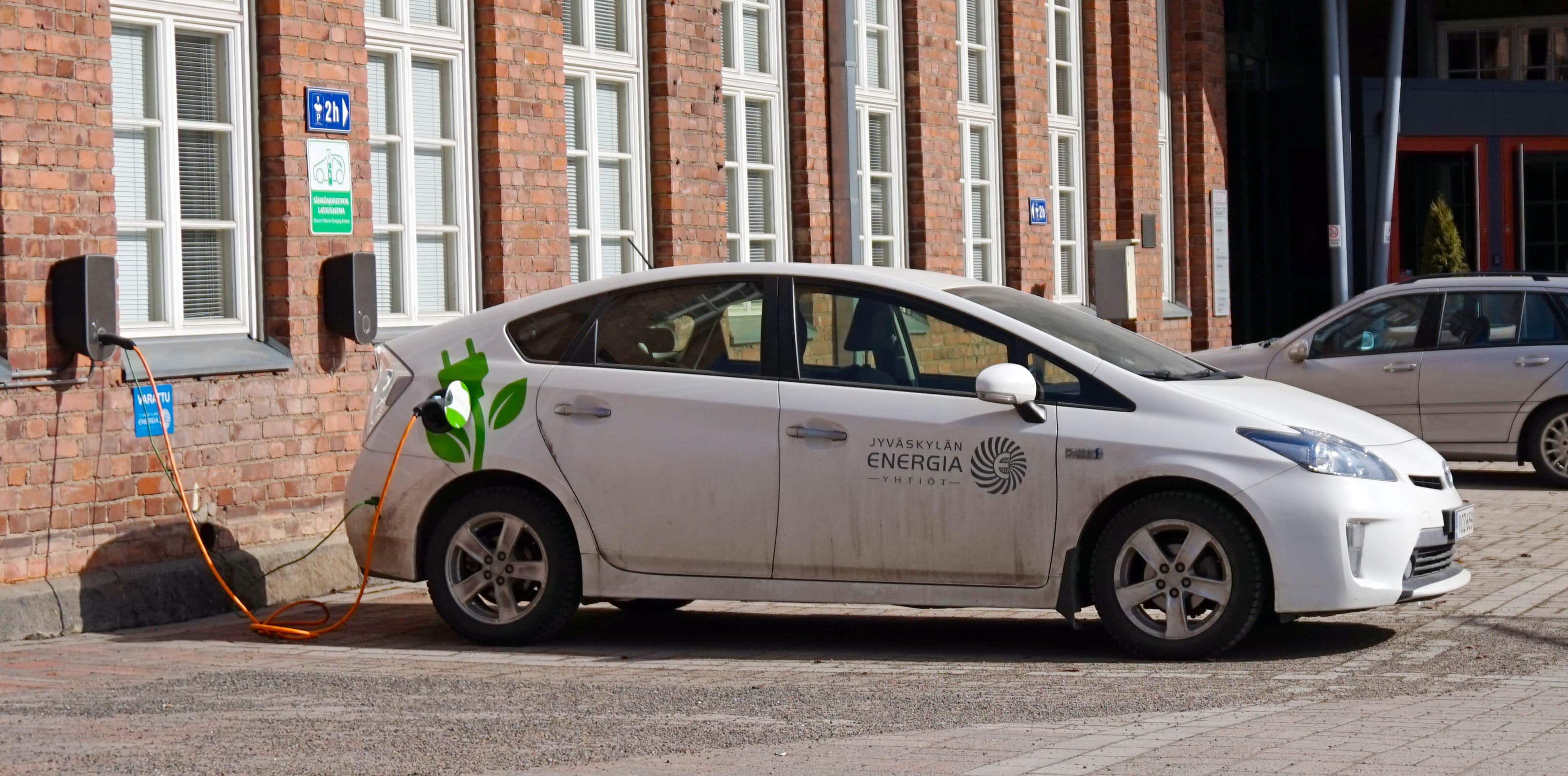
Quick answer
- Level 1 (120V household)
- A normal wall outlet on a dedicated circuit. Delivers about 1.3 to 1.9 kW — roughly 3 to 5 miles of electric range per hour for most PHEVs. A full refill on a 14 to 18 kWh pack takes 10 to 14 hours. Works for short commutes if your building allows overnight plugging in an assigned stall.
- Level 2 (240V AC)
- The J1772 plug you see at workplaces, malls, and shared garages — same connector most home wall units use. Typical PHEV onboard chargers accept 3.3 to 7.2 kW. That adds about 10 to 25 miles of electric range per hour and refills most PHEV packs in 2 to 4 hours. This is the speed PHEV-without-home buyers need access to.
- DC fast charging
- High-power highway charging (CCS or NACS). Most PHEVs cannot use it — battery is too small and hardware is not installed. Do not buy a PHEV expecting DC fast to rescue you. Plan around Level 2 sessions you control.
- Does PHEV work without home Level 2?
- Yes if you have workplace Level 2 most weekdays, reliable public Level 2 near routine stops, or permitted nightly Level 1 in an assigned stall. No predictable plug-in access → buy a regular hybrid instead.
- Public network context
- U.S. DOE Alternative Fuels Data Center data lists more than 250,000 public charging ports nationwide (roughly 180,000 Level 2 and 73,000 DC fast as of mid-2026). National totals do not fix your stall — map the three places you actually park each week.
Start with the charging vocabulary — then shop models
Most PHEV brochures assume a garage and a Level 2 wall unit you own. Millions of apartment, condo, and street-parking households do not have that. They still want electric commuting when possible — and PHEV is the negotiated answer if you can charge somewhere else on a schedule.
Level 1 is a normal 120-volt outlet. On a typical 15-amp circuit you get about 1.4 kW to the car — enough to add roughly 4 miles of electric range per hour on many PHEVs. Plug in at 7 p.m., leave at 7 a.m., and an 8-mile commute is covered. A 30-mile commute on Level 1 alone is a lifestyle project, not a commute plan.
Level 2 is 240-volt AC through the J1772 connector (NACS adapters exist on newer cars). A 32-amp circuit can deliver up to 7.7 kW at the wall; most PHEVs cap intake around 3.3 to 7.2 kW on the onboard charger. That is the difference between a 12-hour overnight refill and a 2.5-hour session while you are at work or Costco.
The Federal Highway Administration puts average daily driving near 37 miles per person. Census commute data puts the mean one-way trip near 27 minutes — but your household miles include school runs, H-Mart stops, and parent airport duty. Match EPA electric range to your real weekday miles, not the brochure fantasy.
PHEV without home charging is a scheduling discipline. Carrying a dead battery makes you drive a heavy gas car with extra weight. If your plug-in opportunities are lottery-based, a Toyota hybrid simplicity beats optimistic PHEV math every time.
Five tests for PHEV without home Level 2
Fail these and buy a hybrid. A PHEV you never plug in is the worst of both powertrains.
Test 1
The Weekly Plug-In Test
List three places you realistically park each week: office garage, gym, grocery mall, assigned condo stall. If none offer Level 2 or permitted Level 1 at least four weekdays, skip PHEV.
Workplace charging is the hidden enabler for many condo and apartment owners. One predictable Level 2 session beats three random public stops.
Worked example
- ·Pass: office Level 2 Mon–Fri, 22-mile round-trip commute, 3-hour parked window
- ·Fail: street parking only, no workplace charging, nearest Level 2 is a mall you visit twice a month
Test 2
The Level 1 Building Test
Verify amperage (15 vs 20 amp), whether the outlet is on a dedicated circuit, and whether extension cords across common areas are forbidden.
Level 1 on a 15-amp circuit adds about 4 miles of electric range per hour on many PHEVs. Eight hours overnight ≈ 32 miles — enough for many commutes if the outlet is reliable every night.
Overnight Level 1 miles added ≈ charge hours × ~4 miles/hr (typical PHEV)
Weekly electric miles ≈ (weekday plug-in days × miles added) − days you forget to plug in
Test 3
The Electric Range Utilization Test
A 42-mile EPA RAV4 Prime covers many suburban commutes on one workplace Level 2 session. A 19-mile Outlander PHEV trim needs more frequent top-ups or a shorter commute.
Winter heat and summer AC draw from the same small pack. Budget 15 to 25 percent less electric range in extreme weather.
Worked example
- ·28-mile weekday miles + 42-mile EPA range + workplace Level 2 three days/week → often workable
- ·35-mile weekday miles + 33-mile EPA range + no workplace charging → hybrid likely wins
Test 4
The Gas Backup Test
Empty-battery PHEV often returns lower mpg than the hybrid version of the same model because of battery weight.
Gas backup eases family trust for unplanned airport runs — that is a feature, not a failure of the electric half.
Test 5
The Public Pricing Test
Residential Level 2 often runs about $0.10 to $0.18/kWh in the U.S. Public Level 2 frequently lands near $0.25 to $0.45/kWh plus idle fees.
Run our public vs home charging calculator with home set to 0% and your real session costs before you assume PHEV beats gas.
Session cost ≈ kWh delivered × price per kWh + idle fees
PHEV fuel savings only count when electric share stays high — below ~30% electric miles, plain hybrid wins
PHEV models and charging reality (verify EPA for your model year)
Electric range, battery size, and onboard charger speed determine how often you must plug in — and how long each session takes on Level 2.
EPA figures are laboratory estimates. Real electric range varies with speed, temperature, and HVAC use. Onboard charger kW limits refill time even when the stall delivers more power.
| Need | Start here | Upgrade path | Watch out for |
|---|---|---|---|
| Maximum EV range on workplace Level 2 | Toyota RAV4 Prime — about 42 mi EPA electric range, ~18 kWh pack, ~6.6 kW onboard (~2.5–3 hr Level 2 full refill) | Chrysler Pacifica Hybrid if you need three rows (~32 mi EPA, ~16 kWh) | Prime inventory is thin in some markets; markups happen |
| Compact crossover value | Hyundai Tucson PHEV / Kia Sportage PHEV — about 33–34 mi EPA, ~13.8 kWh, ~7.2 kW onboard (~2 hr Level 2 refill) | Ford Escape PHEV (~37 mi EPA) if range matters more than badge | Smaller pack means less buffer for forgotten plug-in days |
| Minivan school runs + gas road trips | Chrysler Pacifica Hybrid — about 32 mi EPA electric, ~16 kWh, Level 2 refill in roughly 2–3 hours | Toyota Sienna hybrid (not plug-in) if you cannot plug in reliably | Pacifica without charging behaves like a heavy minivan on gas |
| Premium + workplace-first profile | Lexus NX 450h+ (~37 mi EPA) or Volvo XC60 Recharge (~35 mi EPA) with confirmed office Level 2 | BMW X5 xDrive50e (~40 mi EPA) if three-row space is not required | Premium PHEV empty-battery mpg and repair costs hurt if electric share stays low |
| Budget PHEV with short commute | Mitsubishi Outlander PHEV — verify trim; EPA electric range varies widely by model year (roughly 19–38 mi) | Used Toyota Prius Prime if range needs stay under ~25 mi | Older trims with shorter EPA range need daily plug-in discipline |
PHEV shortlists by household job
Match size first, EPA electric range second, onboard charger speed third.
Compact family PHEV
Daily errands plus gas road trips when charging is workplace-first.
Models to consider
Toyota RAV4 Prime (~42 mi EPA) · Hyundai Tucson PHEV (~33 mi EPA) · Kia Sportage PHEV (~34 mi EPA) · Ford Escape PHEV (~37 mi EPA)
Minivan and three-row
School runs on electric when office Level 2 covers the pack before pickup.
Models to consider
Chrysler Pacifica Hybrid (~32 mi EPA) · Toyota Sienna hybrid (fallback if plug-in access fails) · Mitsubishi Outlander PHEV (verify trim-year EPA range)
Premium workplace-first
Comfort and quiet cabin when electric share depends on office stalls.
Models to consider
Lexus NX 450h+ (~37 mi EPA) · Volvo XC60 Recharge (~35 mi EPA) · BMW X5 xDrive50e (~40 mi EPA) · Lincoln Corsair Grand Touring
Quick decision tree
Answer with your next three months of parking, not the garage you hope the board approves.
Question 1
Can you plug in at Level 2 at least three weekdays somewhere you control?
Yes
PHEV shortlist is realistic. Match EPA range to commute miles.
No
If you have assigned Level 1 five nights a week with a commute under ~15 miles, PHEV may still work. Otherwise buy a hybrid.
Question 2
Is your weekday commute under half the car's EPA electric range?
Yes
One workplace or gym Level 2 session may cover the week.
No
You need daily Level 2 access or a higher-range PHEV (RAV4 Prime class).
Question 3
Will public Level 2 cost stay under ~$0.40/kWh where you charge?
Yes
Run hybrid vs EV monthly calculator with 50–80% electric share.
No
Compare gas backup mpg — plain hybrid may beat expensive public PHEV math.
Level 1 vs Level 2 vs DC fast — what PHEV buyers need to know
Broad reference figures for a typical 15 to 18 kWh PHEV battery. Your model's onboard charger limit and EPA electric range change the math — verify on fueleconomy.gov for the trim you buy.
| Category | Best for | Watch out for |
|---|---|---|
| Level 1 (120V outlet) | Assigned stall with building permission; commutes under ~10 miles one way; overnight access 10+ hours | Extension cords across sidewalks; shared outlets that trip breakers; 30+ mile commutes without a midday Level 2 top-up |
| Level 2 (240V J1772 / NACS) | Workplace charging 2 to 4 hours per day; mall or gym sessions on a fixed schedule; shared garage stalls with working chargers | Idle fees when your pack fills in 2 hours but you stay parked 8; broken stalls on Sunday; per-kWh pricing above ~$0.40 that erases gas savings |
| DC fast (CCS / NACS) | Full BEV road trips — not most PHEVs | Assuming fast charge will save a PHEV without home Level 2. Most PHEVs lack DC fast hardware entirely. |
Partial charging households
The charger you can access beats the charger on a national map.
- Workplace Level 2 is the unspoken enabler for many Asian American and Asian Canadian condo owners who cannot install home wall units.
- Family approval improves when gas backup covers unplanned parent airport runs — PHEV is a bridge, not a purity test.
- GTA and GVA condo boards delay outlet installs for years; PHEV only works if office or mall charging is already part of your week.
- Never plug in without building permission — fire liability and insurance voiding are real board topics, not forum hypotheticals.
Real-world partial-charging scenarios
Worked examples — plug your numbers into our calculators before you sign.
Condo garage, office Level 2 Mon–Fri
22-mile round-trip commute. Workplace Level 2 free for 4 hours while parked. RAV4 Prime (~42 mi EPA). Charge Tuesday and Thursday to 80%; gas handles the weekend Costco run to Naperville.
Likely best fit: PHEV works. Electric share often lands 60–80% with discipline.
Assigned stall, Level 1 only, board-approved outlet
8-mile one-way commute. Dedicated 120V outlet in stall, plug in nightly 11 hours. Hyundai Tucson PHEV (~33 mi EPA). Adds ~40+ miles overnight on Level 1 — covers weekday miles if you never forget to plug in.
Likely best fit: PHEV works if the outlet is reliable every night. One missed night does not kill the week.
Street parking, gym Level 2 three times per week
28-mile round-trip commute. Level 2 at gym for 90 minutes after work (~7 kW → ~10 mi added per session). No home, no workplace charging.
Likely best fit: Marginal. Electric share likely stays under 30%. Shop a hybrid instead.
GTA condo, workplace charging, winter commute
Scarborough to downtown Toronto ~35 km round trip. Office Level 2 five days. Pacifica Hybrid for school pickup. Winter range loss cuts electric miles roughly 20%. Gas covers February weeks when the office garage charger is ICE-blocked.
Likely best fit: PHEV works with gas backup expectations. Read our GTA region guide for rebate differences vs U.S. buyers.
Run the math before the dealer runs the payment
Hybrid vs EV monthly and public vs home charging calculators accept mixed charging — model 50%, 70%, or 80% electric miles from workplace Level 2 before you pay the PHEV premium.
The bottom line
PHEV without home charging works when Level 2 — or disciplined Level 1 — is part of your weekly routine, not a hope.
If you cannot name three places you will plug in this month, buy the hybrid and skip the battery weight. If workplace Level 2 is locked in, match EPA electric range to your real commute and run the calculators with public pricing.
The old garage photo on EV brochures is not your life. The charging session you repeat every Tuesday is.